


Wildlife Photography in Northern Michigan has a way of pulling you into the moment. You can show up with a plan, a checklist, and a full battery—and still end up standing quietly at the edge of a marsh because the light got soft, the air got still, and something moved in the reeds. That’s the charm up here: the land is beautiful, but it’s the wildness that makes it feel alive. For anyone who loves being outdoors with a camera, Northern Michigan offers a steady stream of opportunities—if you’re willing to slow down and let nature do what it does best.
If you’re getting into wildlife photography, Northern Michigan is a pretty perfect classroom. It’s not just about “big animals,” either. Sure, you might spot whitetail deer stepping out at dusk, bald eagles patrolling shorelines, or sandhill cranes calling across a wetland like they own the place. But some of the most memorable images come from the smaller stories: a chickadee holding still for a split second in winter light, a great blue heron looking prehistoric at the water’s edge, or an otter surfacing at just the right moment. Up here, patience isn’t a personality trait—it’s a strategy.
Light is everything, and Northern Michigan makes that obvious fast. Morning and evening aren’t just prettier; they’re when animals feel safer and move more naturally. The long summer twilights can stretch your shooting window, while fall brings low sun angles that add texture to feathers and fur. Winter—when it shows up with snow and clean air—simplifies backgrounds and makes tracks, trails, and movement patterns much easier to read. That’s why Rebel Miles Photography leans hard into timing and atmosphere. Rebel Miles Photography isn’t just chasing “a shot”; it’s building images that feel rooted in place and season.
Gear matters, but it’s not the whole story. A longer lens helps you keep distance and still fill the frame. A camera that handles higher ISO gives you more freedom at dawn and dusk. But the real advantage is fieldcraft: moving slowly, staying downwind when you can, using natural cover, and resisting the urge to walk straight at anything with a heartbeat. Northern Michigan wildlife tends to reward photographers who act like they belong there—quiet, steady, and respectful. Rebel Miles Photography approaches every outing with that mindset, because the goal isn’t to “win” the encounter; it’s to earn it.
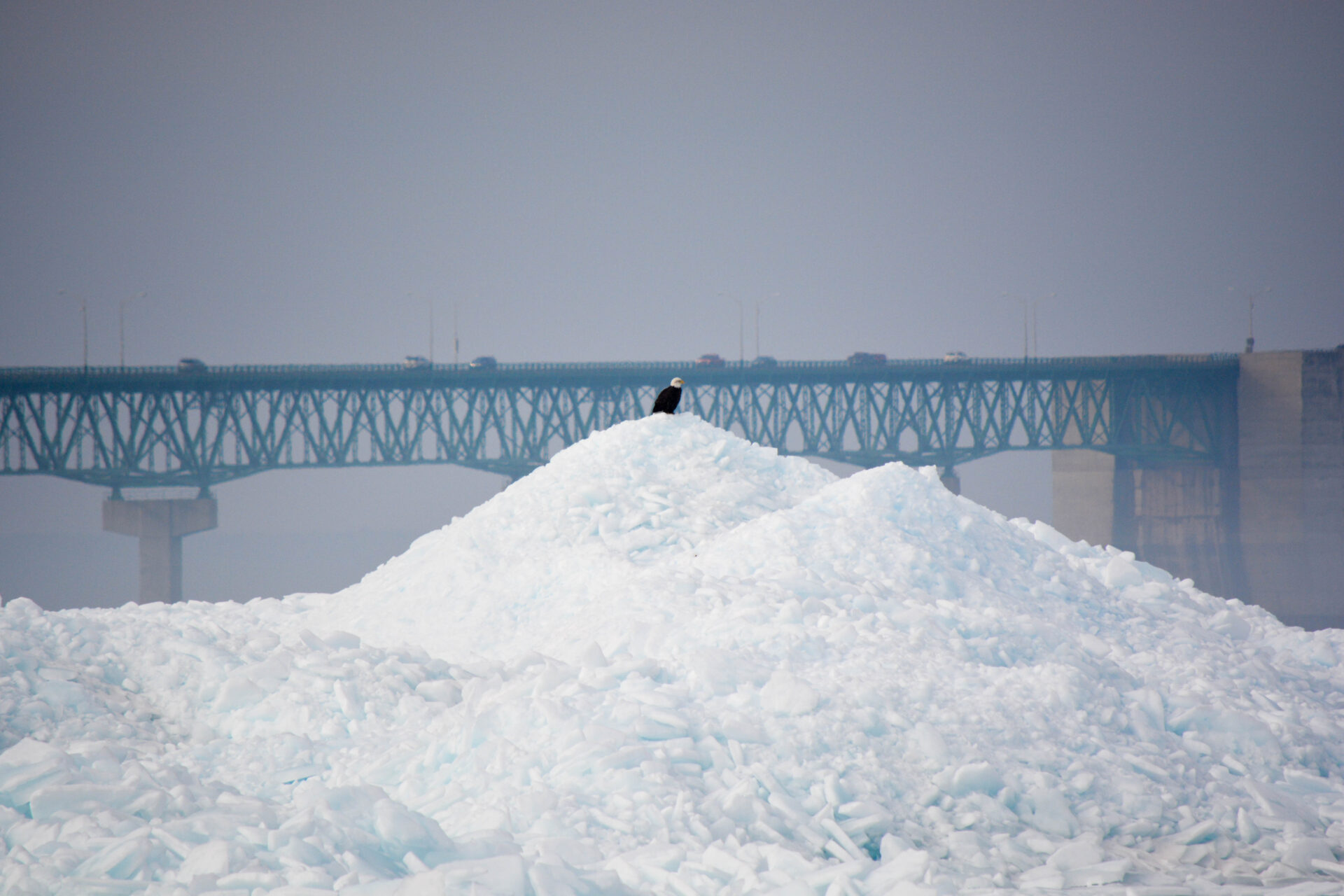
A big part of successful wildlife photography is learning to predict instead of simply hoping. Deer don’t just appear randomly; they use consistent runs and edges. Birds communicate constantly, and when you learn the difference between normal chatter and alarm calls, the forest starts giving you hints. Along rivers and lakes, signs tell stories: tracks in soft mud, slide marks at the waterline, scattered shells from a quick meal. The more you pay attention to those details, the less you feel like you’re wandering around and the more you feel like you’re arriving at a scene that was already underway.
Ethics matter here—both for the animals and for the long-term health of the places you photograph. Give wildlife space. If an animal stops feeding, repeatedly watches you, or changes direction because of your presence, you’re too close. Avoid baiting; it changes behavior and can put animals at risk. Stay on durable surfaces near dunes and sensitive shoreline areas. This isn’t about being overly cautious; it’s about doing it right. Rebel Miles Photography keeps that respect front and center, because the best images are the ones you can feel good about years later.
Composition is where your work starts to look intentional instead of accidental. Northern Michigan can be wildly scenic, but backgrounds can also get busy—branches, reeds, harsh sky, or bright water. The trick is separation: position yourself so the subject sits against a clean backdrop, like open water, a darker tree line, or a softly lit field. Sometimes a single step left or right makes the difference between chaos and calm. That’s also where the region helps you develop a recognizable style. The lakes bring cooler tones, fields bring warm gold, cedar brings deep green, and distance often adds that soft blue haze that feels uniquely northern. Rebel Miles Photography builds on those natural tones rather than fighting them, creating images that feel classic instead of overly processed.
When it comes to camera settings, keep it practical: protect shutter speed first. Wildlife moves—sometimes slowly, sometimes in a flash. For perched birds or calm mammals, a faster shutter like 1/500 can work, depending on your focal length and stability. For birds in flight, you’ll often want 1/1600 or higher. Don’t be afraid of ISO; a sharp image with a little noise beats a soft image with “perfect” settings. Use continuous autofocus for moving subjects and pay attention to highlights, especially on white birds, reflective water, or snow. This kind of disciplined approach is a big part of what makes Rebel Miles Photography images feel consistently strong across changing conditions.
One of the best ways to grow quickly is to return to the same types of locations again and again. Marsh edges at dawn. River bends with soft banks. Field-and-wood transitions at sunset. Shoreline points where hunting birds like to patrol. Wildlife is patterned, and repeated visits teach you the rhythm: what shows up, when it shows up, and how weather shifts behavior. Ten visits to one marsh will teach you more than one visit to ten random places. That’s a philosophy Rebel Miles Photography sticks to because it builds both skill and confidence—plus it produces a body of work that feels cohesive.
Wildlife photography editing should support the story, not overpower it. Northern Michigan doesn’t need neon color to look dramatic. Keep tones natural, protect highlights, and sharpen carefully so feathers and fur stay detailed without turning crunchy. If you’re working with higher ISO images, reduce noise without wiping away texture. Misty mornings, lake gradients, and winter skies all benefit from gentle editing. If you want your portfolio to feel refined, consistency matters more than intensity. This is another reason Rebel Miles Photography focuses on subtle, honest finishing—images that look like the moment felt.
In the end, Northern Michigan teaches you that wildlife photography isn’t about forcing encounters or collecting trophies. It’s about showing up, paying attention, and letting the place guide you. Bring patience, dress for the weather, and accept that sometimes the best part of the day is the quiet itself. Then, when the moment arrives—an eagle dropping low over the water, a deer pausing in perfect side light, or a fox crossing a snowy path—you’ll be ready. Not because you rushed it, but because you stayed long enough to be part of it. And that’s the real payoff: images that feel wild, grounded, and unmistakably Northern Michigan.
Rebel Miles Photography
231.300.1010
jy@rebelmilesphotography.com
“Just Being Yourself Is A Successful Rebellion…”

Leave a reply